

7 Simulation Lab Setup Mistakes Every Educator Should Avoid
This article outlines the most common mistakes educators make when setting up simulation labs and offers practical ways to prevent them. It highlights key areas such as planning, equipment selection, and proper maintenance to ensure effective learning environments for medical and nursing students.
What you’ll learn:
- How to plan your simulation lab with clear objectives
- The importance of adequate storage and inventory management
- Choosing between high- and low-fidelity manikins
- Setting up reliable technical infrastructure
- The value of facilitator training and maintenance planning
Medical and nursing schools utilize simulation laboratories to provide students with a more practical, hands-on educational experience that avoids the use of real-life patients as test subjects. It is a great way for students to learn from real-life scenarios and make mistakes without risking harm to others.
When it comes to setting up a simulation lab, it is the educators who frequently make mistakes. Educators often fail to think about the specific lessons they want to teach students before setting up their simulation labs. If you want your students to receive the most effective education possible, you must create a simulation lab that addresses all their learning needs.
Below are the top 7 simulation lab setup mistakes every educator should avoid
1) Low Amount of Storage Space
A simulation lab will require a substantial number of medical supplies and resources to teach lessons, including manikins, training kits, IV tubes, medical gloves, and simulated medication. Unfortunately, many educators underestimate the amount of storage space they need for their simulation labs. They usually end up in labs that lack sufficient space to store all their essential supplies.
Make a list of the items you need to store away before designing your simulation lab. Then, calculate the amount of storage space you will need to hold all these items in your lab.
2) No Clear Goals or Objectives
Many educators become preoccupied with the design and equipment they want for their simulation labs. Meanwhile, they fail to consider the specific educational goals and objectives they have for them. If you don’t plan on what you want your lab to teach students, it may lack the resources, space, or equipment to provide the necessary simulated educational experience.
You need to consider the types of simulation training you want to provide to your students, such as IV insertion, surgery, suturing, wound care, and other relevant procedures. Once you have clear objectives laid out, you will know the proper design and equipment that your lab will need.

3) Ignoring the Technical Infrastructure
One of the most critical aspects of a simulation lab is its technical infrastructure, which includes microphones, cameras, flat-screen monitors, sound systems, speakers, batteries, Wi-Fi connections, virtual reality equipment, and electrical circuits. Certain audiovisual technology may be vital for teaching your simulation lessons properly.
Don’t ignore the technical infrastructure like many other educators do. If you know the simulated training lessons you’d like to teach, you will know which technology you need for your lab. Remember that the technical equipment differs from the medical equipment, but one may complement the other during a simulated training scenario.
4) Misunderstanding High Fidelity and Low Fidelity Manikins
Educators often lack an understanding of the technological differences between high-fidelity and low-fidelity manikins. They figure that manikins are manikins without any real concept of how some manikins can perform more realistic functions and actions than others.
High-fidelity manikins are realistic manikins designed to mimic lifelike physiological responses to specific medical tasks or treatments. Low-fidelity manikins are not technically advanced, meaning they are usually static manikins with no simulated actions or reactions. Both types of manikins can be useful, but make sure you understand what each one can do before using them in your simulation lab.
5) No Simulation Facilitation Training
Students are not the only ones who need simulation training. Educators must also practice facilitating their simulation training. In many cases, educators rely too heavily on their simulated manikins, medications, and tools to facilitate training scenarios. However, the implementation and management of these simulation items are critical to ensure that students get the best educational experience possible.
Create a simulation plan that outlines how to utilize the simulation items to develop specific training scenarios. The outline may include explanations about the various staff members who assist in orchestrating the scenarios, such as manikin technicians, simulated patients, and faculty leads. Each staff member will have an assigned role in facilitating the simulation to ensure it proceeds smoothly without any issues.

6) Not Stocking Enough Items in the Inventory
Every simulation lab requires an inventory of sufficient medical supplies to support its simulation training scenarios. The last thing you would want to happen is to run out of supplies when you’re trying to teach a group of students. Educators are known to make this mistake quite often, but that doesn’t mean you need to make it.
Take some time to evaluate your class curriculum and review all the simulation training exercises that will take place in the lab. Next, calculate the number of students who will participate in the simulation training exercises throughout the semester. By factoring in the simulation training exercises and the number of students, you can determine how many supplies you need for your inventory during the semester.
7) Underestimating the Maintenance Requirements
Simulation labs require regular maintenance to ensure they remain clean, sanitary, and operational. If an educator doesn’t design their lab to simplify its maintenance requirements, it could create unsanitary conditions and technical malfunctions for students.
For example, make sure your lab has drop ceilings with removable panels over critical pieces of equipment, such as gas lines, lighting fixtures, and AV equipment. By doing this, technicians will be able to perform maintenance and repairs on these items without significantly disrupting the lab infrastructure.
Another essential setup task is to label all items, including pumps, lights, storage rooms, oxygen lines, AV cables, and other relevant components. Labeling will ensure that staff members, students, and maintenance technicians can accurately and quickly identify everything in the lab.
Stock Your Simulation Lab with the Right Medical Supplies Today
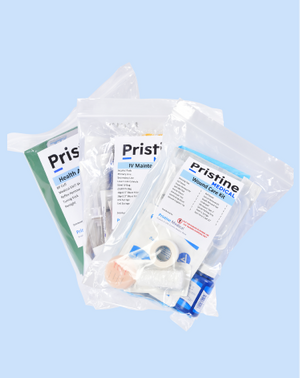
Do you need high-quality medical supplies for your simulation lab setup? Pristine Medical is the top provider of medical and nursing supplies worldwide. You can find all the simulations, training tools, and resources necessary to create a robust simulation lab for your educational facility.
Frequently Asked Questions about Setting Up a Simulation Lab
1. What’s the most common mistake educators make when setting up a simulation lab?
A big one is underestimating storage needs. Simulation labs require space for manikins, training kits, IV tubes, gloves, and simulated meds. Make a detailed list first, then design storage to fit everything you’ll need.
2. Why do I need clear goals before I buy equipment?
3. What technical infrastructure should I plan for from day one?
4. How do high-fidelity and low-fidelity manikins differ—and does it matter?
Yes. High-fidelity manikins simulate lifelike physiological responses; low-fidelity manikins are more static. Both are useful, but you should match the manikin type to your training goals so learners get the appropriate level of realism.
5. Do educators also need simulation facilitation training?
Absolutely. It’s not just the manikins and supplies—implementation and management matter. Create a plan that clarifies roles (e.g., manikin technicians, simulated patients, faculty leads) and how each scenario will run so sessions are smooth and effective.