

How to Teach Needle Length Selection for IM Injections Based on Patient Type
Teaching nursing students how to select the correct needle length for intramuscular (IM) injections is essential for safe and effective patient care. With proper instruction on needle measurements, patient assessment, and simulation-based practice, educators can help students confidently choose the right needle for every patient type.
Key points:
- Why selecting the correct needle length is critical for safe IM injection administration and avoiding patient harm
- How patient factors such as age, weight, body mass index, and injection site influence needle length selection
- Why a "one size fits all" approach to needle selection is unsafe and can lead to severe pain or long-term tissue and bone damage
- The importance of teaching standard needle measurements, including gauge thickness and length ranges for IM injections
- How to teach differences in needle length selection between infants, children, and adults based on muscle development and tissue thickness
- Why simulated manikins offer a safe environment for students to practice IM injections without risking patient harm
- How simulated human patients provide diverse body types and realistic reactions to help students build clinical judgment
- Why repeated hands-on practice with standardized IM injection kits is necessary for students to master needle selection
Knowing how to administer an intramuscular (IM) injection is a critical part of any nurse’s education and training. It is a common technique used in a clinical environment to deliver medication deep into a patient’s muscles. That way, the patient’s bloodstream can quickly absorb the medication and benefit from the effects.
Many students understand how to identify the proper medication and draw up the proper dosage of the solution into the syringe. However, students often struggle choosing the proper needle length to use for their IM injections. They assume any needle can do the job, but they would be wrong in that assumption. The right needle length is based on the type of patient.
Top Tips for Teaching Needle Length Selection to Students
Your students need to know how to select the right needle based on the patient’s age, weight, body mass index, and the specific injection site on their body. After all, an IM injection must pass through multiple skin tissue layers, such as the epidermis, dermis, and subcutaneous tissues, before the needle reaches the underlying muscle tissue.
Since each patient’s subcutaneous skin layer has a different level of thickness, there is no “one size fits all” approach to needle selection. If a student were to choose the wrong needle length, it could end up striking their patient’s bone and cause them severe pain and long-term damage. That is what you and your students will want to prevent at all costs.
Below are the top tips for teaching needle length selection to your nursing students.
1) Teach About Needle Measurements
One of the first things you should do as an educator is to teach your students about standard needle measurements. The unit of measurement for a needle’s thickness is a gauge. Needle gauges can range from 16G to 30G, with 16G being the thickest needle and 30G being the thinnest needle.
Generally, IM injections require a needle gauge of between 22G and 25G, with lengths ranging from 5/8 inches to 1.5 inches. The only exception might be an obese patient undergoing bariatric surgery, who might require a needle length of over two inches. But, in most cases, a length between 5/8 and 1.5 inches is sufficient.
2) Measuring Needles for Children vs. Adults
An infant less than 12 months old has a lack of muscle tissue in their body. The safest place to administer an IM injection on an infant is their thigh muscle, but it must be a needle one inch or less in length. Older children between 1 and 10 years old will typically need a needle between one inch and 1.25 inches in length for an IM injection in the thigh.
Adult patients typically receive their IM injections in the deltoid area of their upper arm, especially those receiving vaccine injections. Because the subcutaneous tissue over the deltoid is relatively thin in most adults, the needle length can be anywhere from 5/8 inches to 1.5 inches in length.
For example, a man or woman under 130 pounds only needs a needle between 5/8 inches and one inch in length due to their smaller size. Anyone between 130 and 300 pounds will need a needle of between one and 1.5 inches due to their larger size. If the patient is over 300 pounds, that is when they might need a special needle longer than 1.5 inches.
3) Practice on Simulated Manikins
The first two steps involve teaching theoretical knowledge about needle length and thickness measurements. Your students must have this knowledge before performing any IM injections. Once you have taught this to them, your students can begin practicing in a simulated training environment.
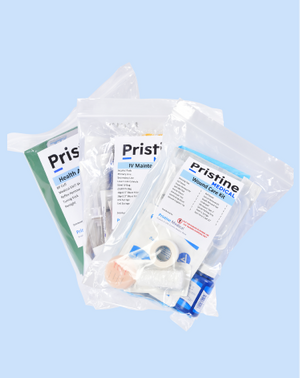
Set up a simulation lab or classroom where your students can practice administering IM injections on simulated manikins that resemble real patients. You will need to supply your students with a standardized IM injection kit containing all the necessary medical tools and supplies needed to perform the injection. And, of course, the simulated manikins will serve as the patients.
Simulated manikins offer a safe and effective way for students to practice administering IM injections without any risk to a real human patient’s safety. Whether you supply your students with a full-body or partial-body manikin, they can practice as many times as they want until they understand how to choose the proper needle lengths correctly.
4) Practice on Simulated Human Patients
Of course, the one downside to simulated manikins is that they all offer one particular body or limb size. You won’t find too many obese manikins available. That is why your students should eventually practice IM injections on simulated human patients once they have gotten enough practice on the manikins.
Simulated patients are real human beings who have undergone the necessary training to properly react to a student’s performance on them. If a student does something wrong during the IM injection process, the simulated patient will know how to react accordingly. That way, the student can learn from their mistake without actually injuring the patient.
The benefit of simulated patients is that they come in all shapes and sizes. They offer your students the best practice in choosing the proper needle lengths based on various body shapes and sizes.
Conclusion
Selecting the correct needle length for an IM injection is no easy task. It requires a thorough assessment of the patient’s age, weight, BMI, and medical condition. No student will choose the correct needle length on their first try. It often requires repeated practice and training until a student can start choosing the correct needle length for each patient.
A simulated training environment offers the best opportunity for your students to practice choosing needle lengths. All you need to do is stock your simulation environment with the proper tools and supplies for your students to have a realistic IM injection training experience.
Pristine Medical is the premier provider of simulated medical supplies, such as IM injection kits, syringes, and needles. You can acquire all the simulated medical supplies you need to properly teach your students how to select needle lengths for their IM injections.
Frequently Asked Questions About Teaching Needle Length Selection for IM Injections
1. Why is needle length selection important for IM injections?
Choosing the correct needle length ensures the medication reaches the muscle tissue without striking bone or remaining in subcutaneous fat. The wrong needle length can cause severe pain, tissue damage, or reduced medication effectiveness.
2. What patient factors determine the correct needle length?
3. What is the standard needle gauge range for IM injections?
4. How do needle length requirements differ between children and adults?
Infants under 12 months need needles one inch or less for thigh injections, while children aged 1 to 10 require one to 1.25 inches. Adults usually receive deltoid injections with needle lengths of 5/8 inches to 1.5 inches, depending on body weight.
5. How do simulated manikins help students practice IM injections?
Simulated manikins offer a risk-free environment for students to practice IM injections repeatedly. They allow students to develop accuracy and confidence in needle selection and injection technique without endangering real patients.
6. Why should students practice on simulated human patients?
Simulated human patients come in various body shapes and sizes, giving students experience selecting needle lengths for different patient types. They also react realistically, helping students learn from mistakes and improve their clinical judgment.