

Infusion and Syringe Pump Training: How to Teach Safe Pump Use in Nursing Programs
Infusion and syringe pumps are some of the most common medical instruments used in modern healthcare practices. Doctors and nurses use them to administer a precise amount of liquid-based medication or nutrients into a patient’s body over an extended time period. Since manually administering a specific amount is too difficult, medical professionals use these pumps to deliver the correct amount to patients.
Infusion pumps are designed for delivering larger volumes of continuous fluids from IV bags into a patient’s bloodstream. Syringe pumps are small motorized mechanical devices that regulate the speed of a syringe’s plunger as it administers a liquid treatment to a patient.
Each type of pump plays a critical role in treating all kinds of patients in various clinical settings, such as hospitals and outpatient facilities. Because of this, every nursing program needs to provide a comprehensive infusion and syringe pump training course to their students.
That way, the nursing students will develop the necessary skills to carefully control their infusions when administering antibiotics, insulin, chemotherapy, pain medication, and other life-saving IV fluids. Otherwise, an uncontrolled infusion rate could have devastating consequences for the patient.
Key points:
-
Why infusion and syringe pumps are essential for delivering antibiotics, insulin, chemotherapy, and pain medication at controlled rates
-
The difference between infusion pumps for larger continuous IV volumes and syringe pumps that regulate a syringe plunger
-
Why students should learn the fundamentals in a classroom, including prescription verification, tubing selection, air removal, and alarm recognition, before entering the lab
-
The essential supplies a program needs, including IV bags, alcohol pads, surgical tape, catheters, IV tubing, sterile gloves, and artificial blood
-
Why safe pump programming matters and which settings students must set and verify, including volume, infusion rate, timing, and medication parameters
-
How to respond to common pump alarms such as low battery, air in the line, flow interruption, and empty IV bags
-
Why realistic clinical scenarios, like a postoperative patient on IV antibiotics or a pediatric patient on a syringe pump, deepen student learning
-
Why medication safety verification remains critical, since a pump cannot prevent errors from wrong programming or the wrong medication
The Best Tips for Infusion and Syringe Pump Training
Which elements establish a viable infusion and syringe pump training simulation for a nursing program? That is what every educator of a nursing school must ask themselves.
To help you get started, below are some of the most recommended tips for developing a safe and effective infusion and syringe pump training simulation.
1) Teach the Fundamentals of the Training Course
Before your nursing students practice using infusion and syringe pumps, they must understand why they need to learn about them in the first place. After all, these pumps can do more than provide fluid delivery to patients. Nurses routinely use these instruments to administer medications that require carefully managed infusion rates.
In your training course, your nursing students will need to learn about verifying medication prescriptions, choosing the right tubing, removing air from the system, recognizing pump alarms, and troubleshooting other common problems. All of this will likely need to be taught in a classroom environment before moving your students into a simulation laboratory setting.
First, make sure your students understand the difference between infusion pumps and syringe pumps. After that, have your students become familiar with the pump’s display screen, keypad, tubing connections, battery indicators, alarm system, and programming menus before ever administering simulated medications.
2) Obtain the Essential Supplies
Your simulation nursing laboratory must come equipped with the very best supplies for conducting infusion and syringe pump training. These supplies should be the same ones commonly used in hospitals and other healthcare facilities for infusions and IV treatments.
In addition to the infusion and syringe pumps themselves, some of the other essential supplies you will need to stock in your laboratory include:
-
IV liquid bags
-
Alcohol pads or swabs
-
Surgical tape
-
Catheter
-
IV tubes
-
Sterile medical gloves
-
Artificial blood
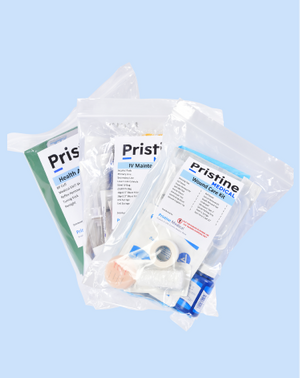
A good standardized IV insertion kit will likely contain most of the medical supplies that you will need for your nursing program’s training simulation with infusion and syringe pumps. Anything else not found in the kit, such as artificial blood, can be purchased separately.
3) Teach and Observe Safe Pump Programming
Infusion pumps have digital screens to program them. One small programming error could cause a significant infusion-related medication administration mistake. That is why you must have your students practice programming the pump to ensure a safe delivery of the medication.
The main settings that your students must observe, set, and verify for accuracy include:
-
Medication parameters
-
Volume
-
Infusion rate
-
Scheduled timing of delivery
-
Insertion location
Have your students repeatedly practice programming the pumps until they become excellent at it. You should also teach your students how to respond to the pump alarms that go off if a potential problem occurs, such as a low battery, flow interruption, air detected in the line, empty IV bags, or an open door.
4) Create Realistic Clinical Scenarios
Nursing students learn best when they can apply their knowledge in realistic clinical situations that resemble actual patient care scenarios. Rather than continuing to have your students program their pumps in an isolated laboratory environment, let them practice their skills in a simulated clinical scenario that challenges them further.
For instance, you could create a scenario in your simulation laboratory where a postoperative patient requires IV antibiotics via an infusion pump. Another good scenario is a pediatric patient who needs medication delivered through a syringe pump. And to enhance the scenario challenge further, you can create changes in patient vital signs or adverse reactions to medications. These situations are when the pump alarms would likely go off.
Of course, you don’t need to use real human patients in your laboratory. Instead, you can have your students train with high-fidelity manikins or IV trainer arms to practice using infusion and syringe pumps safely. These tools make it easier for nursing students to train with confidence because they don’t need to worry about injuring a real person.
5) Reinforce Medication Safety Lessons and Procedures
Infusion and syringe pumps can improve medication accuracy, but they cannot prevent inaccuracies entirely. If a student doesn’t program the pump correctly, or if they prepare the wrong medication, it will cause problems for the patient regardless.
Therefore, nursing students must have extensive practice in verifying medication types and dosages before connecting a medication to a patient’s IV line. Have them double-check the pump settings and medication types, such as insulin or chemo drugs, to reduce the risk of medication errors.
Get Your Infusion and Syringe Pump Training Supplies Today
Do you want to ensure that your nursing program’s simulation laboratory comes equipped with the best infusion and syringe pump training supplies?
Pristine Medical is one of the most trusted and respected medical suppliers by nursing schools throughout the country. They offer simulated syringe pumps, infusion pumps, IV bags, and other critical medical supplies needed.
Frequently Asked Questions About Infusion and Syringe Pump Training
1. What is the difference between an infusion pump and a syringe pump?
An infusion pump is designed to deliver larger volumes of continuous fluid from an IV bag into a patient's bloodstream. A syringe pump is a small motorized device that regulates the speed of a syringe's plunger as it administers a liquid treatment, making it well suited to smaller, precise doses.
2. Why do nursing programs need infusion and syringe pump training?
3. What should students learn before using the pumps in a simulation lab?
4. What supplies does a pump training program need?
5. What pump settings must students verify for safe programming?
6. How should students respond to pump alarms?
7. Why are realistic clinical scenarios useful in pump training?
8. Can infusion pumps prevent all medication errors?