

What are the Different Types of IV Fluids? Isotonic vs. Hypotonic vs. Hypertonic Explained
Intravenous (IV) fluids are grouped into three categories (isotonic, hypotonic, and hypertonic) based on their tonicity, or the concentration of dissolved particles compared with blood plasma. Tonicity determines whether water moves into cells, out of cells, or stays balanced, which is why each fluid type serves a different clinical purpose. Nursing and medical students who understand how these fluids affect osmosis and fluid balance are better prepared to choose and administer the right solution in a real clinical setting.
Key Points
- Body water is divided into intracellular fluid inside the cells and extracellular fluid between the cells and in the blood plasma.
- Osmosis moves water across semipermeable membranes, and IV fluids influence this balance according to their tonicity.
- Isotonic fluids have a particle concentration similar to blood plasma, so water moves in and out of cells at equal rates.
- Normal saline (0.9% sodium chloride), Lactated Ringer’s, and Plasma-Lyte are common isotonic fluids used to replace extracellular fluid lost through vomiting, diarrhea, bleeding, dehydration, or surgery.
- Hypotonic fluids, such as 0.45% sodium chloride, contain fewer dissolved particles than plasma and help rehydrate cells in conditions like hypernatremia and cellular dehydration.
- Hypotonic fluids carry a higher risk of complications, including cellular swelling that can lead to brain damage if administered incorrectly.
- Hypertonic fluids, such as 3% sodium chloride and 5% dextrose in normal saline, draw water out of cells and can help reduce brain swelling after traumatic brain injury, stroke, or brain tumors.
- Students should practice administering each fluid type in a simulated setting with training IV bags before working with real patients.
Nurses and medical professionals use various types of intravenous (IV) fluids every day to treat their patients. IV fluids may be used to provide hydration, nutrients, or blood to patients who desperately need them to stay alive and healthy while dealing with certain medical conditions.
However, not all IV fluids move and function the same way because each type of IV fluid has a different chemical composition. These chemical compositions determine how the IV fluids move throughout the body to deliver the necessary treatment. That is why medical professionals classify IV fluids by putting them into three identifiable categories:
- Isotonic
- Hypotonic
- Hypertonic
Each type of IV fluid has a different number of dissolved particles that influence how they move throughout the bloodstream. Nursing and medical students must understand the differences between these various types of IV fluids in order to prepare themselves for success in a real clinical setting.
Understanding the Basics of IV Fluids
Students should have a basic understanding of how IV fluids work before learning about the different types of IV fluids.
As you may know, water exists inside and outside the cells contained within the human body. The water inside the cells is known as intracellular fluid, and the water outside the cells is known as extracellular fluid. The extracellular fluid is the water between the cells and the plasma within the blood vessels.
Osmosis is a natural process that occurs within the body to create balance between these two fluid types. During this process, water moves through a semipermeable membrane to maintain the fluid balance inside and outside the cells. This process is vital when it comes to administering IV fluids, which influence this balance.
Tonicity is a word that describes the concentration of dissolved particles in IV fluid, relative to the concentration of particles in the blood plasma. Each IV fluid type has different tonicity, which means various levels of fluid will enter and leave the cells based on its chemical composition.
Since certain medical conditions cause a disruption to the osmosis of a patient’s body, nurses and medical professionals must know the proper IV fluids to administer to bring balance back to it. For this reason, knowing the differences between the types of IV fluids is critical.
Get Your Medical Supplies Today
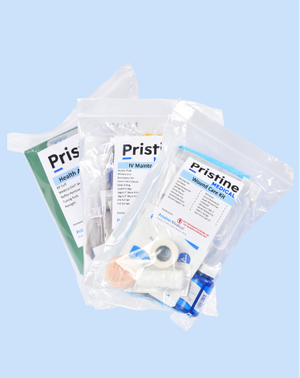
Do you need to stock your training laboratory with IV fluid kits or all relevant medical supplies, such as IV catheters and blood bags? Pristine Medical is the premier supplier of simulated IV fluid supplies to help train nursing and medical students.
Frequently Asked Questions About IV Fluid Types
1. What are Isotonic IV Fluids?
Isotonic IV fluids have a concentration of dissolved particles similar to blood plasma, so fluid moves in and out of red blood cells at equal rates. They are commonly used to replace extracellular fluid lost through diarrhea, vomiting, bleeding, dehydration, or certain surgical procedures. Common examples include normal saline (0.9% sodium chloride), Lactated Ringer's, and Plasma-Lyte.
2. What are Hypotonic IV Fluids?
3. What are Hypertonic IV Fluids?