
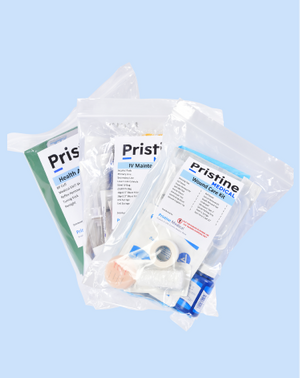

Top 8 Student Challenges Solved by Realistic Simulation Kits
This article explores how realistic simulation kits help medical and nursing students overcome the most common challenges in clinical training. It highlights how hands-on practice builds confidence, skill, and teamwork while bridging the gap between theory and real-world application.
What you’ll learn:
- How simulation kits reduce fear and improve confidence
- Ways to develop specialized and procedural skills
- The role of hands-on training in managing emergencies
- How simulation promotes teamwork and communication
- Why standardized kits ensure consistent student experiences
Medical and nursing students face many challenges during training. The biggest challenges come when they transition from classroom learning to clinical practice, where they are expected to perform in realistic medical scenarios. Classroom learning may teach concepts and procedures, but it will never fully prepare students for the experience of implementing them in a clinical setting.
For this reason, realistic simulation kits are used to help students overcome the common challenges they face in these situations. Simulation kits offer realistic medical tools and accessories to help students learn how to use them in real medical scenarios. That way, they will have the hands-on experience needed before they end up treating actual human patients.
Below are the top 8 student challenges solved by realistic simulation kits
1) Fear of Hurting Patients
Many students are uncomfortable in clinical settings due to their fear of hurting real patients. Simulation kits establish risk-free scenarios where there is no chance of injuring or inflicting pain upon a real person.
For instance, realistic simulation kits may include placebo medication, manikins, artificial limbs, and other accessories to assist with training. Students can practice techniques and treatments on the manikins and limbs without worrying about injuring a person. That way, students can focus all their attention on perfecting their performance.

2) Low Confidence / Lack of Experience
Students with only classroom training often lack the confidence and experience necessary to perform effectively in clinical settings. Low confidence will make students feel unprepared, leading them to make more mistakes.
Simulation kits are an easy way to boost student confidence. They enable students to practice their techniques and treatments repeatedly until they master them. This repetition is a great learning strategy because it helps build muscle memory and skill. Once that happens, students will have more confidence and experience in what they are trying to accomplish.
3) Learning Specialized Skills for Complex Procedures
Classrooms will never help students learn specialized skills to perform complex procedures. The only way they will develop these skills is by practicing with realistic simulation kits in clinical scenarios.
For complex procedures, you can supply your students with customized simulation kits that have all the necessary tools to perform them. It will give students the chance to learn the steps of using these tools to complete the complex procedures they are learning.
The best part is that students don’t need to practice on human patients. They can easily use their simulation kits to practice on manikins or artificial limbs. Once students have had sufficient practice, they can begin working with simulated human patients before graduating from their class.
4) Bridging the Gap Between Theory and Practice
Textbooks are basically learning templates. They provide theoretical knowledge about medical concepts and procedures. However, they will never fully prepare students for the real-life experience of converting those theories into action. Only the best training and practice can do that for them.
Simulation kits provide the ideal tools for translating textbook knowledge into practical clinical action. Students can use the kits to practice using realistic medical equipment and accessories on manikins and artificial limbs in various clinical scenarios.
For instance, students can use wound care kits to practice using sutures, medical tape, and gauze to treat lacerations and burns. By doing this, they will quickly learn that their theoretical knowledge doesn’t always align with actual clinical experience.
5) Remembering Procedural Steps
Students often struggle to remember all the steps of complex medical procedures. Since each step is critically important for ensuring a patient’s well-being, students need to get them right.
Simulation kits provide students with numerous opportunities to practice procedural steps until they become familiar with them. Whether they have an IV insertion or maintenance kit, students can practice as many times as they want. The repetition makes it easy to remember the dozens of different steps involved in most procedures. That will make it easier to perform them in a real, more stressful clinical environment.
6) Managing Emergencies
One of the biggest challenges for students is learning to manage emergencies effectively. Clinical emergencies are highly intense, stressful, and serious situations that require complete focus and confidence. Students must learn to adapt to such emergencies to ensure they provide patients with the best possible emergency care.
Simulation kits help students prepare for all kinds of emergencies, including rare ones that they may not often encounter in clinical settings. Have your students practice with a variety of different simulation kits to cover multiple types of emergencies, such as tracheostomies. Students should utilize simulation kits with high-fidelity manikins to receive the most realistic emergency care training.
7) Communication and Teamwork
Simulation kits offer more than merely technical training to students. They can also help students learn to communicate and collaborate to address the needs of their patients.
For instance, a wound care kit used in an emergency clinical scenario would require students to coordinate with their peers to perform various tasks quickly. One person could be responsible for finding the right tools and supplies, while another would be responsible for administering the care and treatment.

Students must learn that they cannot do everything on their own. Clinical settings require intense collaboration and dependence between healthcare professionals to ensure speedy and effective treatment for patients.
8) Inconsistent Training Experiences
If instructors don’t supply simulation kits, they run the risk of providing varying medical supplies to different groups of students. A student will have more trouble learning and adapting to clinical procedures if they keep receiving different tools to work with.
Standardized simulation kits solve this problem. They provide the same sets of medical tools and accessories to ensure that students become familiar with them. As a result, it creates consistent training experiences that will prepare students for real-life clinical settings.
Get Realistic Simulation Kits for Your School Today
Do you need realistic simulation kits for your school’s labs? Pristine Medical is a trusted supplier of simulation kits for medical and nursing training. Its range of simulation kits includes wound care kits, IV maintenance kits, health assessment kits, ostomy kits, and more.
Frequently Asked Questions about Realistic Simulation Kits for Students
1. How do realistic simulation kits help students feel less afraid of hurting patients?
They create risk-free practice. Students work with manikins, artificial limbs, and placebo medications, so they can focus on technique and learning from mistakes without the possibility of injuring a real person.
2. Can simulation kits really boost confidence for students with limited clinical experience?
3. What kinds of complex or specialized skills can students learn with these kits?
4. How do simulation kits bridge the gap between classroom theory and real practice?
They turn textbook knowledge into actionable, clinical steps. For example, students can use wound care supplies (sutures, tape, gauze) on manikins to see how real procedures unfold—often revealing where theory and practice differ.
5. Do simulation kits help students remember every step in multi-step procedures?
Absolutely. With IV insertion or maintenance kits (and others), learners can practice as many times as needed. Repetition cements the sequence of steps, so they’re easier to recall in high-pressure clinical environments.