
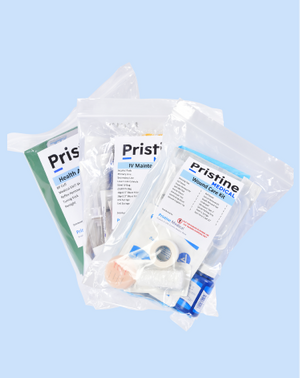

Top 10 Simulation Tools for Teaching Emergency Care Skills
This article highlights the most effective simulation tools for teaching emergency care skills to medical and nursing students. It explains how these tools enhance hands-on learning, build confidence, and prepare students for real-life emergency scenarios.
What you’ll learn:
- The role of high-fidelity manikins in realistic emergency training
- How airway and IV simulators develop essential clinical skills
- Why wound care and ostomy kits are vital for practical education
- The importance of simulated medications and diagnostic tools
- How standardized equipment ensures safe and consistent training experiences
Why are simulation tools critical for teaching emergency care skills?
Simulation tools allow medical students to practice high-risk procedures in a safe environment before treating real patients. They replicate real medical equipment and patient responses so students can learn airway management, IV insertion, wound care, and emergency diagnostics without causing harm. This hands-on training improves clinical confidence, reduces medical errors, and prepares healthcare professionals to respond effectively during real emergencies.
Students require the most effective tools possible when training to deliver emergency care to patients. Simulation tools are viewed as the best because they are realistic and made to replicate the actual tools used in emergency care environments. Since students will face various degrees of emergencies in their future professional lives, they must practice using a range of simulation tools to develop competence in delivering all forms of emergency care.
Below are the top 10 simulation tools for teaching emergency care skills to students

1) High-Fidelity Manikins
High-fidelity manikins are realistic, anatomically correct medical training simulators with advanced physiological functions and reactions. They appear to be real humans and react in similar ways to treatments or actions performed on them.
For instance, the most sophisticated high-fidelity manikins have heart rates, oxygen saturation, blood pressure, respiratory rates, pulse oximetry readings, and more. Some are even capable of emitting artificial blood.
So, when you want to teach emergency care skills to students, you definitely need to have them practice on high-fidelity manikins. It is the best way for them to get a realistic experience in delivering emergency care to patients.
2) Airway Management Trainer
The airway management trainer is a simulation manikin that mimics the standard anatomy of a person’s head and the oral and nasal passages within it. All the essential airway-related anatomical parts are simulated, including the nostrils, tongue, teeth, larynx, trachea, arytenoids, esophagus, lungs, and epiglottis.
Why is airway management one of the most important emergency care skills?
Airway management ensures that oxygen can reach a patient’s lungs and vital organs. During many medical emergencies, maintaining a clear airway is the first life-saving step. Airway trainers allow students to practice intubation, ventilation, and suction techniques using realistic anatomical models of the head and airway system.
The trainer teaches students about airway intubation and suctioning by entering the oral and nasal passages of the body. It also trains them in observing the pupils and manually checking the carotid pulse. All beginner nursing and medical students will receive vital training in airway management when working with this manikin device.
3) IV Training Arm
The IV training arm enables students to practice their IV insertion and maintenance skills. It is a simulated high-fidelity, adult-sized limb with similar skin aesthetics and internal anatomy to a real human arm. Students can practice accessing veins and administering fluids with their IV catheters and fluid bags.
The realistic features of the IV training arm include lifelike skin texture, an 8-line vascular system, a hand, fingers, a forearm, and a visible dorsal venous network. It allows students to practice a variety of IV-related techniques, including intravenous infusion, venipuncture, transfusion, and blood sampling. Students will even experience an intense “pop” when they have entered the vein.
4) IV Insertion Kit
The standardized IV insertion kit contains all the essential IV-related supplies and tools for students to practice their IV insertion skills, whether working with a manikin or a human arm. The typical items found in an IV insertion kit include a tourniquet, examination gloves, an alcohol swab, gauze, a catheter, a saline-filled syringe, surgical tape, an activated valve, and a dressing.

Medical and nursing students must become experts in IV insertion because it is a common practice in emergency and routine care. The IV insertion kit will help students become familiar with the items they will use when inserting an IV into a patient’s arm.
What equipment is typically included in an IV insertion kit?
A standard IV insertion kit contains all the essential supplies needed to safely place an intravenous catheter. These kits typically include gloves, tourniquets, antiseptic swabs, catheters, gauze, saline syringes, and dressings. Using standardized kits helps students learn the correct preparation and sterile technique required for IV procedures in real clinical environments.
5) IV Maintenance Kit
The standardized IV maintenance kit simulates realistic IV training scenarios, where healthcare professionals monitor and administer IV treatments. The tools found in an IV maintenance kit include syringes, IV lines, needles, saline solutions, and IV bags.
Students using this maintenance kit will gain valuable experience securing catheters, dressings, and other attachments to prevent accidental dislodgement or other complications that could cause patient injury. Since some patients require long-term IV treatment, students need to learn the maintenance requirements of such treatment.
6) Wound Care Kit
The standardized wound care kit is a comprehensive training set designed for treating various types of wounds, including burns and lacerations. Any student planning to work in emergency care will need to know how to care for wounds. The wound care kit includes all the common items to treat wounds in any emergency clinical scenario.
You can expect to find the following items in a wound care kit: a dressing tray, an underpad, exam gloves, surgical tape, gauze, sponges, abdominal pads, packing strips, closure strips, syringes, a silicone practice pad, a suture removal kit, and a staple removal kit.
7) Simulated Medications
Simulated medications are placebo medicines that contain purified water or saline solutions. The three primary forms of simulated medications are ampules, vials, and oral tablets.
Why do medical schools use simulated medications during training?
Simulated medications allow students to practice medication preparation and administration without using real drugs. These training products look identical to real pharmaceuticals but contain harmless substances such as saline or purified water. Students learn how to read medication labels, calculate dosages, and administer treatments safely.

Their packaging and labeling closely replicate those of real medical packages and labels. All medical and nursing students must know how to read the labeling on medication packages. It will ensure that they choose the right type of medication and the correct dosage amount to administer to patients in need of critical care.
8) Stethoscopes
Stethoscopes are essential medical tools in emergencies. They enable nurses and doctors to listen to a patient’s heart rate and lung sounds, aiding in the diagnosis of their current health condition. All students training to become healthcare professionals must become proficient in recognizing these sounds and making critical life-saving decisions based on them.
9) Ostomy Kit
The standardized ostomy kit contains all the necessary items to teach students how to perform ostomies, which allow urine and stool to exit through an artificial opening in the body. The items in the kit include a drainable pouch, ostomy flange, curved tail closure, adhesive remover wipes, skin protective wipes, and ostomy measuring tool.
Students will need to perform ostomies when treating patients who have certain critical diseases, such as inflammatory bowel disease, incontinence, congenital disabilities, or cancer.
10) Blood Pressure Cuff
All healthcare professionals must know how to accurately measure a patient’s blood pressure, especially when the patient is in a critical condition. Students must practice repeatedly using a blood pressure cuff on an artificial or human arm to gain experience in taking accurate blood pressure measurements. The ability to do this properly could be a matter of life or death in emergencies.
Why is accurate blood pressure measurement critical during emergencies?
Blood pressure readings provide immediate insight into a patient’s cardiovascular stability. Abnormally high or low blood pressure can signal life-threatening conditions such as shock, stroke, or heart failure. Medical students must practice measuring blood pressure repeatedly to develop the accuracy and speed required in emergency situations.
Acquire High-Quality Simulation Tools for Your School
Do you need the best simulation tools to provide students at your medical or nursing school? Pristine Medical offers a wide range of essential simulation tools, including the ones mentioned above. They can provide your students with a practical and realistic learning experience when learning emergency care skills.
Frequently Asked Questions about Simulation Tools for Teaching Emergency Care Skills
1. Which simulation tools are most important for practicing real emergency care?
The article highlights ten essentials: high-fidelity manikins, an airway management trainer, IV training arm, IV insertion kit, IV maintenance kit, wound care kit, simulated medications (ampules, vials, tablets), stethoscopes, an ostomy kit, and a blood pressure cuff. Together, they let students rehearse assessment, procedures, and decision-making in realistic conditions.
2. Why are high-fidelity manikins recommended for emergency training?
3. What’s the difference between the IV training arm and the IV insertion or maintenance kits?
4. How do airway management trainers and stethoscopes work together in teaching?
The airway management trainer lets students practice intubation, suctioning, and checking anatomy from nostrils to lungs. Stethoscopes then support assessment—listening for breath and heart sounds—to inform rapid decisions during airway and respiratory emergencies.
5. What role do simulated medications play in emergency simulations?
Simulated medications are placebo ampules, vials, and tablets with realistic labels and packaging. They teach learners to read labels accurately and select the correct type and dosage under pressure—an essential emergency care skill without using real drugs.