

Two-Way vs Three-Way Catheters: When to Teach Each Type in Training Labs
This article explains the differences between two-way and three-way catheters and outlines when each type should be taught in nursing and medical training labs, helping educators structure catheter training safely and effectively.
What you’ll learn:
-
The functional differences between two-way and three-way catheters
-
Clinical situations where each catheter type is used
-
When to introduce two-way catheter training in nursing and medical programs
-
Why three-way catheters require advanced, post-operative training
-
How simulation manikins support safe catheterization practice
-
What equipment and supplies are essential for realistic catheter training labs
Catheters are thin, transparent tubes used to drain fluid from a patient’s bladder when they are unable to empty it naturally. Some patients require catheters if they suffer from incontinence, nerve damage, or undergo surgery. In other cases, medical professionals may use IV catheters to administer medication into the vein or to draw blood from it.
Catheterization is a common topic taught in virtually all nursing or medical training programs. When students are introduced to catheters for the first time, they may be confused by the different-looking tubes and bags associated with them. In particular, the two-way and three-way catheters will stand out.
What is a Two-Way Catheter?
The two-way catheter is a standard Foley catheter. One end of the catheter has two distinct tubular channels: one drains urine or fluids, and the other inflates a tiny balloon with sterile water to prevent the catheter from accidentally slipping out of the bladder. The small balloon is attached to the other end of the tube, which is inserted into the patient.
Students who learn about the use of two-way catheters will eventually gain the skills needed to manage patients suffering from the following conditions:
-
Enlarged prostate
-
Neurogenic bladder
-
Incontinence
-
Paralysis
-
Sepsis
Draining urine in these circumstances is critical for the patient’s life and comfort. Failure to provide adequate drainage can cause the patient to suffer kidney damage, infection, and possibly even death. Students must receive sufficient training in the insertion and management of two-way catheter treatment to improve the comfort and quality of life of their future patients.
What is a Three-Way Catheter?
The three-way catheter is a specialized catheter with slightly thicker tubes. The setup is almost the same as the two-way, except this one has three distinct tubular channels on one end. That is how you can easily tell the three-way catheter apart from the two-way catheter.
The first two channels serve the same purpose: one drains fluid, and the other inflates the balloon with sterile water on the other end. The third channel provides continuous irrigation to the bladder. It may also be used to deliver medication if necessary.
Students who understand three-way catheters will know how to manage patients suffering from the following conditions:
-
Post-bladder surgery
-
Hematuria
-
Urinary obstruction
-
Cancer (chemotherapy)
-
Bladder stones
-
Infections

Failure to use a three-way catheter properly could result in bladder rupture, severe urological trauma, pain, spasms, and life-threatening infections. This failure could happen from an accidental bladder rupture, traumatic insertion, accidental ureteral placement, or simply using the wrong-sized catheter
When to Teach About a Two-Way Catheter
The two-way catheter is the primary device used to manage a patient’s urine. You can find a two-way catheter in pretty much every clinical setting, such as an emergency room, a recovery room, a nursing home, and a long-term care facility. For this reason, the two-way catheter should be in every nursing and medical training lab.
The first semester of a nursing program is a good time to introduce the two-way catheter. Nursing students need to practice it frequently throughout their training, so it is better to teach it to them early on. Medical students will also need exposure to two-way catheters, both in their early semesters and during their clinical rotation training at school.
Mastering the Technique
One of the best reasons to teach about two-way catheters early on is to help students develop the discipline to maintain cleanliness and sterilization. It isn’t so much about learning anatomy as it is about learning sterility. Students must know how to create a safe zone between themselves and the patient.
Part of this practice involves learning to coordinate the dominant and non-dominant hands. The dominant hand is the sterile hand that inserts the catheter, while the non-dominant hand touches and holds the patient’s labia or penis. The non-dominant hand comes into contact with the patient’s “contaminated” skin, so it must never touch the catheter. Likewise, the dominant hand must never come into contact with the patient’s skin.
These are rather simpler lessons in nursing and medicine than learning about complex disease management. They teach students to understand the differences between the dominant and non-dominant hands and how they are critical to maintaining a sterile environment for the patient. Students will also practice testing the balloon to ensure it is properly and securely in place.
When to Teach about a Three-Way Catheter
The three-way catheter requires more advanced skills because it involves managing irrigation, balancing fluids, and reducing the risk of bleeding and clot retention. That is why most schools teach about three-way catheters in advanced or specialized training courses. They won’t normally be taught to first-year students (or at least not until they have proven their competency with the two-way catheter).
Teaching Post-Operative Surgery Care
Schools will typically introduce the three-way catheter lessons when students are ready to learn about post-operative surgical care. The reason is that a patient’s bladder is at a much higher risk of developing blood clots after surgery. The three-way catheter is used to help prevent blood clots before they form.
Blot clot prevention with a three-way catheter requires continuous bladder irrigation using a sterile solution. Flushing the bladder regularly will keep it clear and prevent possible blockages. It will also keep the patient hydrated and, if necessary, medicated. The technical skills required here are much more advanced than those of a first- or second-year student.
Students learn a lot more about fluid balance and regulation during their three-way catheter lessons. In a training lab, students observe the fluid color of the drainage and learn to adjust the irrigation bag flow accordingly. Recognizing the color differences in the fluid will determine whether to increase or decrease the irrigation flow.
Introducing Simulations
The good news is that you don’t have to force your students to take any big risks right away with their catheter training. Just make sure you equip your training lab with the latest simulation devices and technologies, including low- and high-fidelity manikins. They are the best practice instruments because they are lifelike humans that aren’t actually human, so they don’t feel anything.
For instance, if you wanted to teach students how to insert a catheter into an infant’s bladder, you could use the infant pediatric urethral catheterization simulation trainer. It is a complete replica of an infant with realistic anatomical structures that provide the same pressure and resistance as a real patient. Since this would be a high-risk procedure on a real baby, the manikin eliminates the stress and pressure that a student would feel in an actual clinical situation like this.
Low-risk manikins, such as anatomical task trainers, may be more suited for first-year students learning about two-way catheters. They are less intimidating and make it easier for students to focus on one task at a time.
When to Use Simulated Patients
Students must prove they have mastered the technique and knowledge associated with two-way and three-way catheters. Once they have successfully and flawlessly demonstrated their skills on the manikins, they can proceed to practice on simulated patients during their clinical years of training.
Students in their third and fourth years of medical or nursing school usually begin their clinical rotations in internal medicine and surgery. That is when they will have the opportunity to practice their skills on simulated patients. The difference here is that simulated patients are trained actors who simulate real patients. They will know how to respond to every action you take toward them, whether positive or negative.
Experienced healthcare professionals also guide and observe students during their clinical rotations. They will check whether the students are maintaining a sterile environment and ensuring patient safety. If the students are failing to do something critical, either the clinical instructor or the simulated patient will let them know before they make a crucial mistake.
Fill Your Training Labs with the Right Supplies
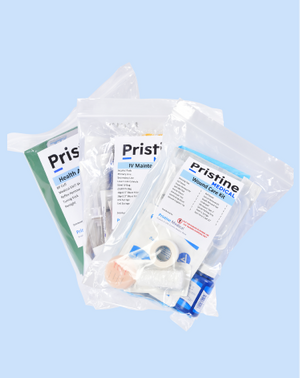
Any decent training lab will have a standardized closed-circuit Foley catheter kit. It has all the essential medical items your students will need when learning to use catheters, such as a drainage bag, bed sheet clamp, pre-filled syringe, specimen container, lubricating jelly, and more.
All training labs should resemble clinical settings, so they should have similar medical supplies stocked. Since you are training students to insert and manage two-way and three-way catheters, you need to ensure they become familiar with the other essential medical supplies used for these procedures. Otherwise, they may fall behind when they eventually train in a clinical setting later in medical school.
Get Your Catheters Today!
Do you need high-quality two-way and three-way catheters for your nursing or medical school? Pristine Medical offers the finest selection of authentic catheters, kits, and manikins for your training labs. Stock your training labs well to ensure your students receive the most authentic educational experience possible.
Frequently asked questions about two-way and three-way catheter training
1. What is the main difference between a two-way and a three-way catheter?
A two-way catheter has two channels: one for draining urine and one for inflating the retention balloon. A three-way catheter includes a third channel that allows continuous bladder irrigation or medication delivery, making it suitable for more complex clinical situations.
2. When should two-way catheters be taught in nursing and medical training?
3. Why are three-way catheters introduced later in training?
4. What clinical situations require the use of a three-way catheter?
Three-way catheters are commonly used after bladder surgery and in cases involving hematuria, urinary obstruction, bladder cancer treatment, infections, or bladder stone management where continuous irrigation is necessary.
5. How do simulation manikins support catheter training?
Simulation manikins allow students to practice catheter insertion and management in a safe, controlled environment. High-fidelity manikins replicate realistic anatomy and resistance, helping students build confidence and technical accuracy before working with real or simulated patients.
6. What supplies should be included in a catheter training lab?
A well-equipped training lab should include standardized Foley catheter kits, drainage bags, pre-filled syringes, lubricating jelly, specimen containers, clamps, and simulation tools that closely reflect real clinical environments.